At Australian Islamic College of Sydney, leadership does not begin with titles — it begins with action.
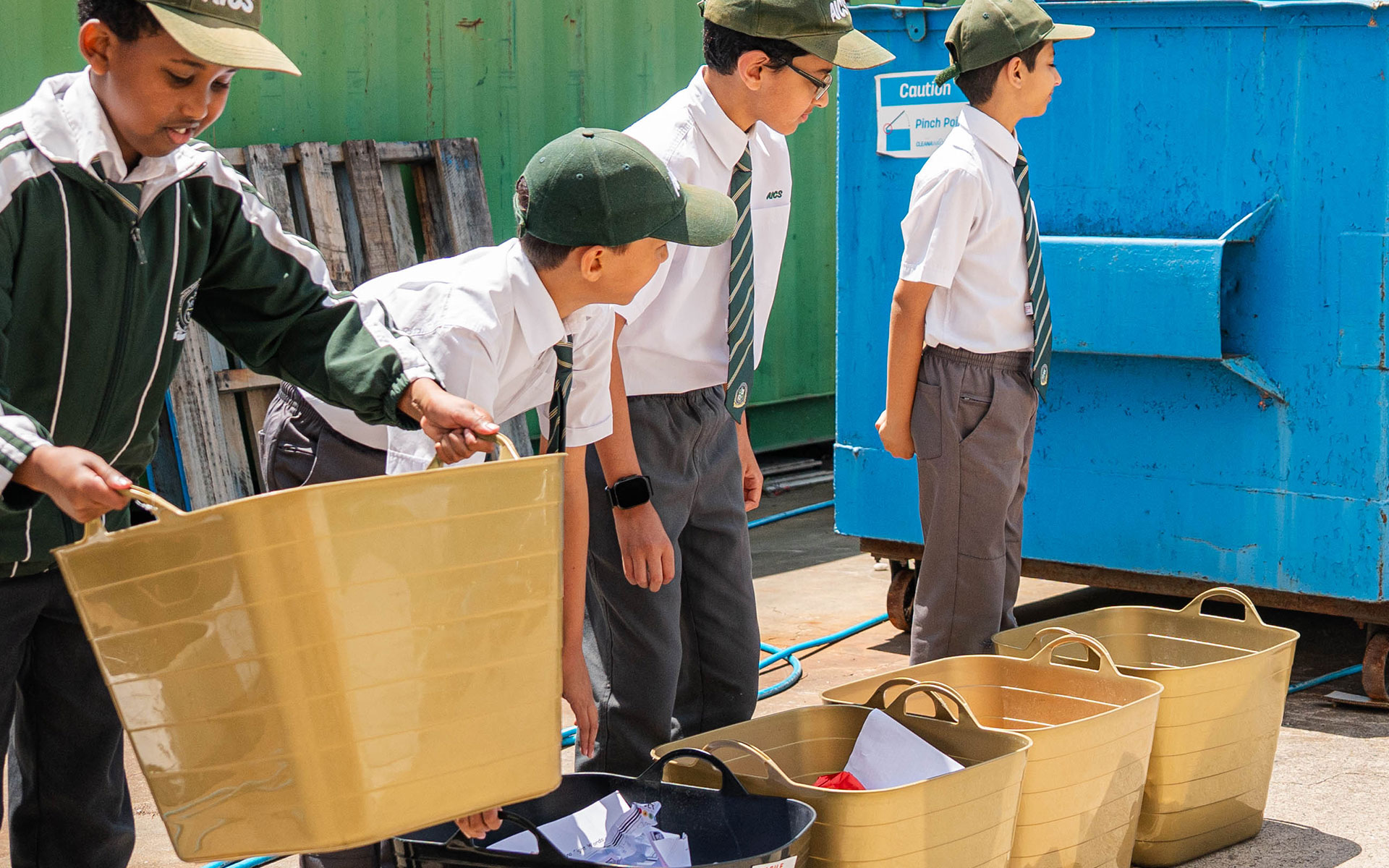
In our Primary School, students are learning that even small choices can create meaningful change. Through hands-on recycling initiatives and sustainability programs, our young learners are introduced to the powerful concept that responsibility for the community — and the Earth — belongs to all of us.
What may seem like a simple activity — sorting materials, managing recycling bins, understanding waste separation — becomes something much deeper. It becomes a lesson in accountability, stewardship and leadership.
Leadership Starts Early
At AICS, we believe leadership is a skill that must be nurtured from a young age. When students participate in recycling programs, they are not only learning environmental awareness; they are developing initiative, teamwork and ownership.
Students are taught how to identify recyclable materials, understand waste systems and recognise how their actions contribute to a larger environmental impact. Through guided discussions, they begin to explore ideas such as resource conservation and the circular economy — understanding that materials can be reused, repurposed and managed responsibly rather than discarded without thought.
These lessons build awareness that extends beyond the school gates.
Learning the Value of Responsibility
Islam teaches the importance of amanah — the trust and responsibility entrusted to us. At AICS, this principle is embedded into daily life.
When Primary students actively participate in sustainability initiatives, they are practising responsibility in a tangible way. They begin to understand that caring for shared spaces, reducing waste and contributing positively to their environment is not optional — it is part of good character.
Through structured programs and teacher guidance, students reflect on why sustainability matters. They connect environmental care to gratitude for blessings and respect for creation. In doing so, they begin to see leadership not as authority, but as service.
Understanding the Bigger Picture
Introducing concepts like the circular economy at a young age fosters systems thinking — the ability to see how individual actions connect to broader outcomes.
Students learn that waste does not simply “disappear.” They explore how materials can be reused, recycled and reintegrated into productive cycles. This early exposure builds critical thinking and ethical awareness, preparing them to become informed citizens in a world increasingly shaped by environmental challenges.
Research consistently shows that early environmental education increases long-term sustainable behaviours. At AICS, we see this impact firsthand — students take their knowledge home, encouraging families to recycle, reduce waste and think more consciously about consumption.
In this way, our Primary students become ambassadors of positive change within their own communities.
Building Community Through Shared Purpose
Leadership at AICS is always connected to community.
Recycling initiatives are collaborative. Students work together, support one another and take pride in shared achievements. They experience the satisfaction of contributing to something larger than themselves.
These programs also create meaningful conversations between teachers, students and families — reinforcing the partnership that sits at the heart of our school culture.
When students see that their efforts matter, confidence grows. They begin to understand that leadership is not about being the loudest voice, but about taking responsibility and inspiring others through consistent action.
Preparing Tomorrow’s Responsible Leaders
The lessons learned in Primary School form the foundation for future growth. As students move into Secondary education — including our new state-of-the-art campus launching in 2026 — these early experiences shape how they approach innovation, sustainability and leadership at a higher level.
At AICS, we are committed to developing students who lead with integrity, serve with humility and act with awareness.
Because sometimes, the most powerful leadership begins with something as simple as placing the right item in the right bin — and understanding why it matters.